
Good Frictions
What convenience removes besides inconvenience.

Welcome to Chartography—insights and delights from the world of data storytelling.
A race car needs tires that grip. It needs brakes too. The machine is fast because it remains answerable to the road.
Without the right resistance, performance becomes panic.
“Message Me When You Get There”
Some friction is good, in race cars and elsewhere. I began thinking about this back in 2011.
Smartphones were passing from novelties to must-haves when I started grad school at MIT. We would often cross the river for beers in Beacon Hill. On my way to Charles Street, I might receive a little request by text: “Message me when you get there.” They didn’t want to head out until they knew someone else was waiting for them.
Smartphone culture was changing how we socialized. Gone were the days of dependable planning. Here was the new: live, dynamic, and information-rich. The new reality seemed practical, even considerate. But it changed the bargain. Committing was out. Waiting until uncertainty cleared was in.
A plan is an agreement to become countable. Three people say they will meet at nine o’clock: I will be there, you will be there, and we can act on that expectation. Part of the package is a promise not to flake out when something better appears at the last minute.
In economic terms, a plan is like a forward contract, real enough that someone can put on a jacket and start across the bridge.

Smartphone culture turned the marketplace into a field of free options. One person still had to make the market by doing the thing. Others could wait, weigh the price, and decide whether to exercise.
My experience was that in-person happenings degraded: it became especially harder to pursue elaborate things because no one wanted to be pinned down.
Not All Friction Is Waste
Some friction is stupid, cruel, exclusionary, and designed to protect whoever already has power. Bad friction humiliates, blocks access, obscures choices, and turns ordinary life into an endurance test. Bad frictions deserve to die.
Good friction is different. It is the resistance that creates contact. Brakes make speed answerable to the road. A time and place make a friend answerable to a plan. Adding a reference makes a claim answerable to a record. A printed chart makes a judgment answerable to a readership’s scrutiny. Good friction glues us together.
Looking back, it feels like the past generation’s project has been reducing commerce and culture into a panel of easy buttons. Digital design’s obsession is finding resistance and removing it. This attitude was promoted early by books like Don’t Make Me Think (Krug, 2000) and The Laws of Simplicity (Maeda, 2006). It materalized in slippery Apple systems.
These movements may have been exactly right about bad friction, but they had little consideration for good friction.
H.D.F. Kitto’s description of Greek excellence (ἀρετή) offers a richer standard. Odysseus can fight, scheme, speak, build and sail a boat, plow a straight furrow, throw a discus, slaughter and cook an ox, and be moved to tears by a song. This is not efficiency in one department. It is competence across life. Convenience culture is brilliant at narrow efficiency: faster routes, funnier clips, and smoother answers. Good friction asks what the whole life requires.
Resistance is not one thing. The same interface that glides you down a path makes it harder to question why you are inside that groove to begin with. Some friction blocks life. Some friction keeps us connected. The hard work is knowing which is which.
Books Stay Put
In 1937, Modern Age Books published The United States: A Graphic History, a compact economic history of the country told through text and pictorial statistics. Louis M. Hacker wrote the text. George R. Taylor handled the statistical research. Rudolf Modley made the charts. Hacker and Modley reportedly worked through hundreds of chart plans before settling on the seventy-six that appeared in the book. Selection was argument.
The book is not quaint. It is a Depression-era attempt to answer a problem that has not gone away: how can a public see the shape of its own condition? It pulls few punches, opening with a pictorial map of George Washington’s slave plantation that counts its human toil and toll in an Isotype style.
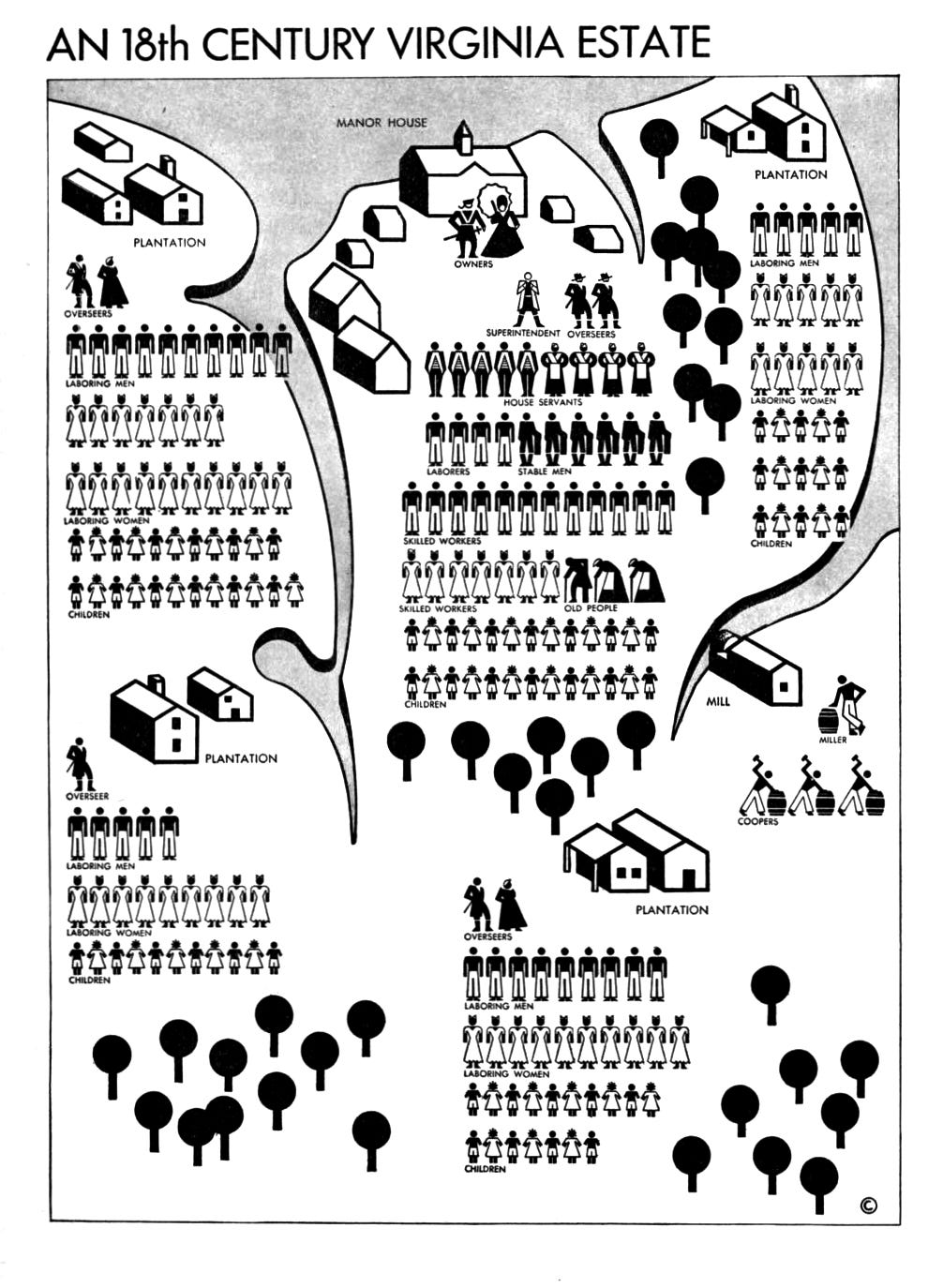
A Graphic History moves through colonial trade, railroads, immigration, bank failures, unemployment, relief cases, productive capacity, and the place of the United States in the world. It does not hand the reader one perfect diagram of America. It makes the reader travel through a rich set of opinionated lenses.
That sequence is one of its useful frictions. You cannot tune the book to flatter a particular question. On your way to a chart about the vote on the Constitution you’ll bump into cotton, corporate ownership, child labor, and the worker’s day. The book makes plenty of individual claims, but it’s chasing something bigger too.
The authors themselves admit that their book is not objective in the false, bloodless sense of the word. It has a philosophical attitude. Good. The admission makes the artifact more available for argument, not less. Its obsessions can be named. Its omissions can be criticized. Its sources occupy pages at the back. Its makers can be blamed.
The reader has somewhere to put disagreement.
That is the value of a public information artifact. Not perfect truth. Perfect truth is not available, and it would not be enough. The value is that the object remains. Many people can inspect the same chart, point to the same title, argue over the same category, return to the same page, and remember the same flawed attempt. The flaw is part of what makes the object public.
A book remains. It may be biased, incomplete, overconfident, or just plain old. But if it is published with structure, evidence, and visible judgment, it gives the public a place to stand and discuss.
The Answering Machine
That smartphone culture shift was an early step in a broader conversion: public artifacts refitted as private services. Plans became live coordination. Maps became directions. Front pages became algorithmic feeds. Publications became AI answers.
🗺️ A map and a route are not the same thing. The map gives context: how things relate, the neighborhood you are skirting, the waterfront views you are missing to save five minutes on your drive. My phone’s directions are better at getting me there, but that’s only one thing a map can do.
📰 A newspaper front page becomes an algorithmic feed. The front page was never perfect. People could object to the buried story, the insulting headline, the absence that revealed the editor’s agenda. In a feed, there are no mastheads to accuse.
📚 Reading old dead-tree media is inconvenient. But the inconvenience gave claims an address, a place. Today, if you encounter any of the knowledge from a book, it’s likely via a quick response from an AI oracle. Our great body of published work has been turned into an answering machine.
As an author, the public incentive to write a book is dwindling. Why bother making a durable artifact when readers want extracted answers?
A route may be more correct than a map for getting me somewhere. A feed may be more tuned to my interests than a newspaper. An AI answer may be more directly responsive than a book.
In that narrow sense, the service may be “truer” to the immediate question. But the older artifact may be better for us all because it preserves context, encounter, memory, and dispute.
This is one reason the phrase “tragedy of the commons” belongs nearby, though not as a headline. The damage is not always dramatic. A commons can become less reliable, less visible, less worth the first risk. When private retreat becomes common sense, the commons thin.
People can still converge on the same scandal, meme, trial, war, election, finale, or outrage. But the convergence is often shorter, sharper, and less attached to a stable experience. We get bursts of common attention without much common ground.
Smartphones, then algorithms, and now AIs. Each step made something feel more alive, dynamic, and information-rich. Each step also changed what counted as participation.
People Used To Have To Endure More Of Each Other
The old ways were not better because people were better. People were flaky, vain, evasive, selfish, status-conscious, and lazy before smartphones, feeds, and answer engines. Older arrangements simply placed more cost on some of those tendencies. They allowed fewer ways to be worse.
The smartphone made it easier to indulge without feeling like a bad person. Reachability became a substitute for reliability. Live information became a substitute for commitment. Everyone could remain available, and fewer people had to be dependable.
This is the comic wisdom of Fran Lebowitz’s “Pretend It’s a City.” The joke is that a city makes the fantasy of private optimization ridiculous. You are not alone. You are on the sidewalk, in the subway, at the bar, in this place with everyone else.

“Pretend it’s a city” means act like other people are real.
A little inconvenience sometimes did civic work by accident. When changing plans was difficult, more people kept plans. Reading the front page made you encounter things you weren’t seeking. Shared bottlenecks made private preference pass through public surfaces before becoming action.
That is what makes convenience so hard to judge. It’s hard to fault anyone for taking reasonable advantage of a new service. But enough reasonable evasions can make the shared surface less worth joining, which gives everyone still more reason to hold back.
On-Demand
Nobody wants to hear a long retelling of your exchange with an LLM. It may have been useful and interesting to you. But socially it resembles the dream you had last night: vivid to the person who experienced it, empty to everyone else. The listener did not share the question, the false starts, the pressure, or the little turns that made the answer feel earned.
The contrast with the 1937 book is sharp. The United States: A Graphic History is limited in every obvious way: old data, old assumptions, old pictorial conventions, old story. But it has one civic advantage. It stays put. Its charts can be pointed at. Its sequence can be argued with. Its sources can be checked. Its choices can be blamed on real creators. Its flaws have handles.
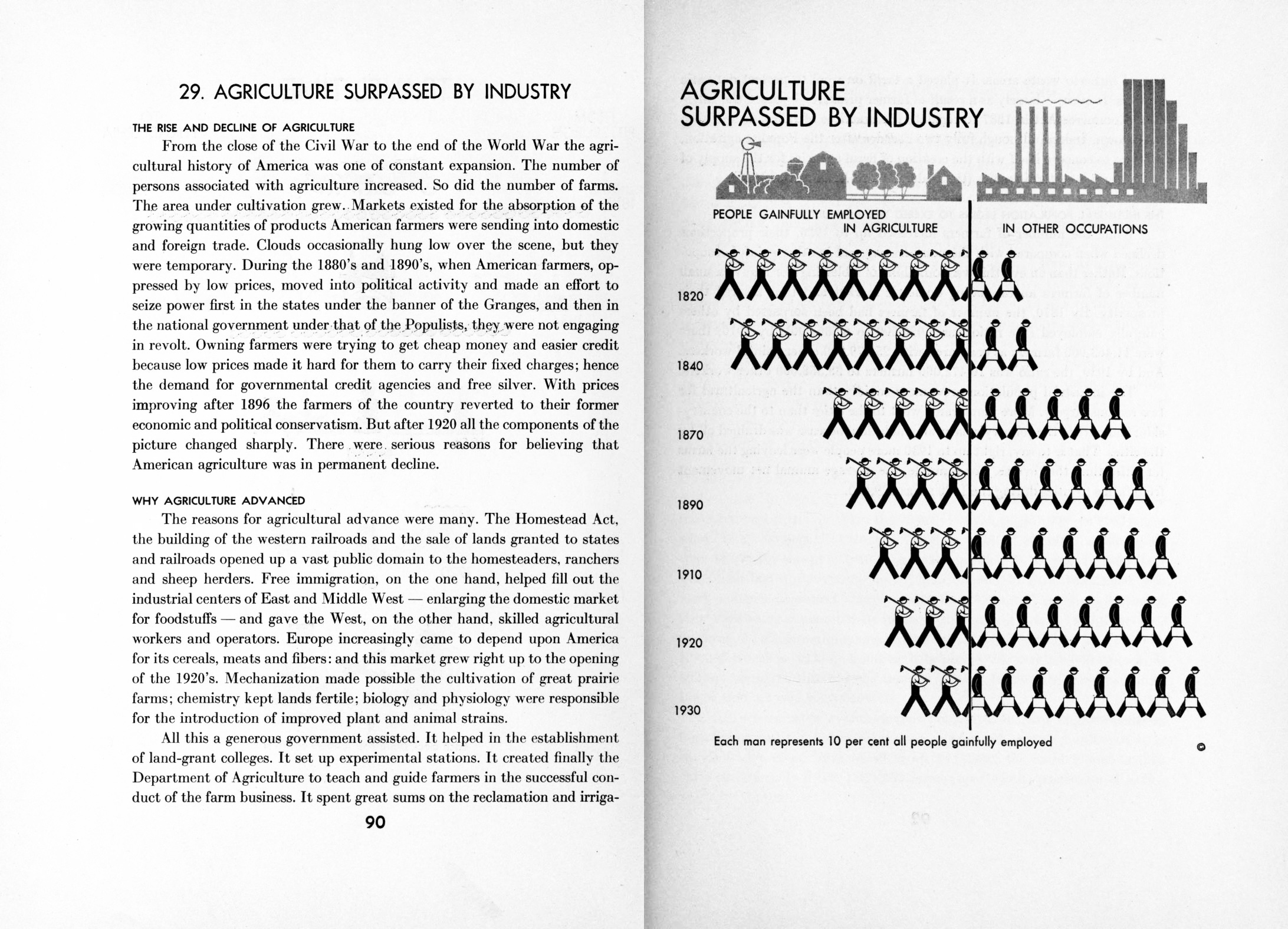
An AI output may be cleaner, faster, more responsive, and more useful than a published artifact. It may even produce a better single chart. But a field of private artifacts is not the same as a public body of work. A better chart for me can still make a poorer memory for us if it arrives without sequence, recurrence, provenance, or shared address.
Not every chart should carry public weight. Tukey’s exploratory data analysis belongs here. Many charts are quick, private instruments for seeing what might be there. They are sketches, probes, working surfaces. They do not pretend to be monuments. The trouble begins when an on-demand chart has the polish of publication without the obligations of publication.
A person can become answer-rich and foundation-poor without ever being obviously misled. The surface gets smoother and the core is hollowed out. I taught a group of undergrads recently at one of the world’s most prestigious universities. While looking at some Soviet propaganda charts, I probed for what was going on in Russia at the end of the first world war. None of them had a lick of familiarity with the Russian Revolution. It was as if I was the first one to ever mention it.
When every answer can be summoned with your fingertips, you end up holding very little.
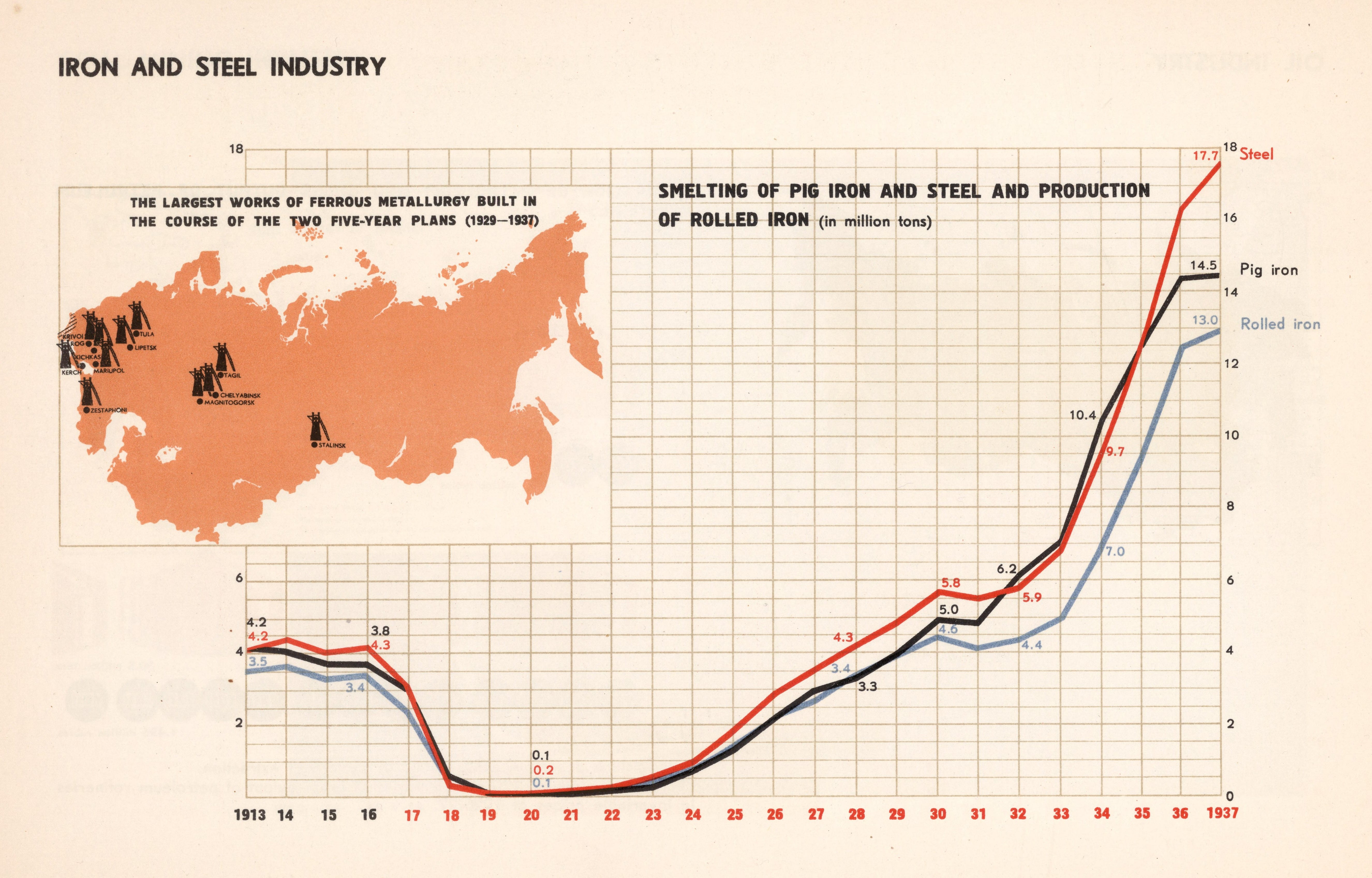
If two people discuss a printed chart, they can point to the same mark. If they disagree about a book, they can return to the same page. If they disagree about a newspaper, they can reference the same headline. But two people enthusing “my AI said” have no shared object between them. They argue from private outputs that cannot be compared in any meaningful way.
AI answers and AI charts can be useful. That’s the wrong distinction. When we need common knowledge, shared judgment, or public memory, a smooth response is not enough. We need sturdy artifacts.
We Are Doing X
While navigating flaky smartphone culture we found an effective hack. The trick was not to persuade everyone at once. The trick was to find one friend willing to commit to a thing, and to be happy if only the two of us went. Then we made the commitment public: “We are doing X. Here are the details.” That did more than announce a plan. It made a small surface. Other people could trust it, join it, decline it, or arrange themselves around it. It worked then, and it’s worked for me many times since.
Make things that others can join. Make the plan. Publish the record. Draw the chart. Name the source. Cite the page. Set the table. Convene the class, trip, club, walk, dinner, or project. Be happy when people critique. Good, they’re engaged. The answer to private convenience is to make common things.
Good friction is the grip that helps a common thing become real: the tire on the road, the awkwardness of arriving first, the time it takes to read the chart, the discipline of publishing the record, the courage of naming the plan before everyone has agreed to come. These frictions are not waste. They are the contact points by which the world is shared.
Onward!—RJ
This essay was inspired by a delicious lunch with Dan Roam.
About
Chartography is the newsletter of Visionary Press and Info We Trust.
RJ Andrews is obsessed with data graphics. He helps organizations solve high-stakes problems by using visual metaphors and information graphics: charts, diagrams, and maps. His passion is studying the history of information graphics to discover design insights. See more at infoWeTrust.com.
RJ’s book, Info We Trust, is out now! He also published Information Graphic Visionaries, a book series celebrating three spectacular creators in 2022 with new writing, complete visual catalogs, and discoveries never seen by the public.
“A human being should be able to change a diaper, plan an invasion, butcher a hog, conn a ship, design a building, write a sonnet, balance accounts, build a wall, set a bone, comfort the dying, take orders, give orders, cooperate, act alone, solve equations, analyze a new problem, pitch manure, program a computer, cook a tasty meal, fight efficiently, die gallantly. Specialization is for insects.” - Sci-Fi author Robert A Heinlein in “Time Enough for Love”
Thanks for writing this!
Indeed truly thinking about the era we living in.